Quarters Up: Why Retro Arcades Are the Hottest Hangout Spots in America Right Now
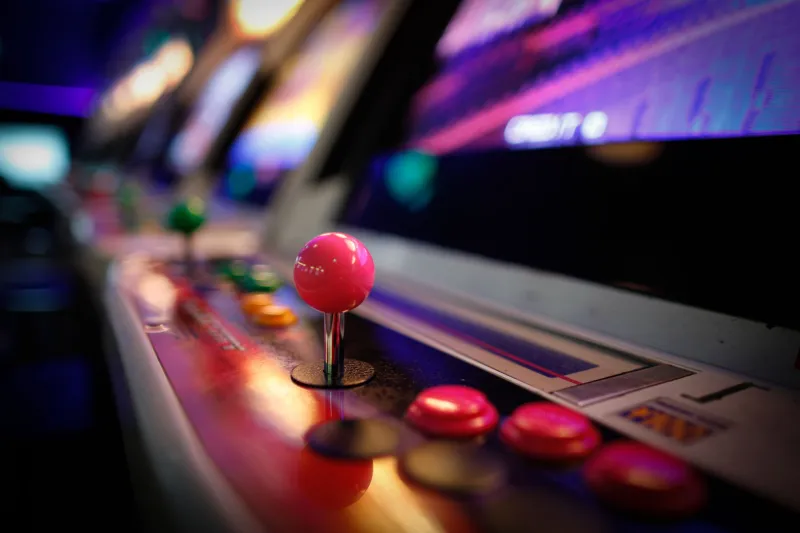
There's something almost magical about the moment a quarter drops into a vintage arcade cabinet. The machine hums to life, a chiptune melody fires up, and suddenly it's 1984 again — except you're holding a craft IPA instead of a grape Slurpee, and the person next to you is filming the whole thing for TikTok. Welcome to the retro arcade renaissance, mateys. It's loud, it's pixelated, and it is absolutely thriving.
The Barcade Boom: Where Joysticks Meet Cocktails
If you haven't stumbled into a barcade yet, you've been sailing the wrong waters. These hybrid venues — part bar, part vintage arcade — have multiplied across the US like power-ups in a side-scrolling platformer. From Barcade (the OG chain with locations in Brooklyn, Philadelphia, and beyond) to regional gems like 16-Bit Bar+Arcade in Columbus, Ohio, and Ground Kontrol in Portland, Oregon, the concept has proven it's no passing fad.
Owners of these establishments will tell you the same thing: the machines practically sell themselves. "We put in a working Donkey Kong cabinet and within a week it had a line," said one Chicago barcade manager who'd rather not name his venue (competitive market, folks). "People aren't just playing — they're competing, comparing scores, trash-talking. It creates this energy you just can't manufacture with a jukebox and a pool table."
The secret sauce? These places give people something to do together. In an era where most socializing involves staring at separate screens in the same room, standing shoulder-to-shoulder at a Street Fighter II cabinet is practically revolutionary.
Why Millennials and Gen Z Can't Get Enough
Here's where it gets interesting. The nostalgia angle makes obvious sense for millennials who grew up feeding quarters into mall arcades — but Gen Z? They weren't even born when most of these games were in their commercial prime. So what's the pull?
Turns out, "retro" hits differently when you've grown up in a world of hyper-realistic graphics and 100-hour open-world epics. The simplicity of Galaga or Centipede is almost radical by comparison. You know exactly what you're doing and exactly how badly you're failing within about thirty seconds. There's no tutorial, no skill tree, no loot box. Just you, the joystick, and your rapidly depleting lives.
Gaming researchers and trend-watchers have pointed to what some are calling "complexity fatigue" — a very real phenomenon where players crave games that don't require a weekend of onboarding before they're fun. Retro arcade games are the antidote. They're immediately accessible, endlessly replayable, and brutally honest about your skill level.
Add in the social media dimension — vintage cabinets are extraordinarily photogenic — and you've got a format that feels both timeless and perfectly suited to the current cultural moment.
The Home Cabinet Market Is Going Absolutely Wild
Not everyone wants to wait in line for a turn at Ms. Pac-Man, and the home arcade cabinet market has responded accordingly. Premium full-size replica cabinets from companies like Arcade1Up have become legitimate living room centerpieces, with some limited-edition models selling out within hours of release and flipping on eBay for two to three times retail price.
For the truly dedicated (or truly flush with cash), companies like Dream Arcades and Rec Room Masters build custom full-size cabinets that can run thousands of games through emulation. We're talking $2,000 to $8,000 for a serious setup — which sounds steep until you realize these things become the centerpiece of every party you ever host for the rest of your life.
Authentic vintage cabinets, meanwhile, have become genuine collector's items. A working original Pac-Man cabinet in good condition can fetch anywhere from $800 to $3,000 depending on its condition and provenance. Serious collectors haunt estate sales, Facebook Marketplace, and specialty auctions with the kind of focused intensity usually reserved for rare baseball cards.
The Indie Devs Keeping the Pixel Flame Burning
Here's the part of the story that genuinely warms Captain OK's heart: a whole generation of indie game developers has embraced the retro aesthetic not as a gimmick, but as a genuine artistic choice. And some of them are making games that rival — or outright surpass — the classics they're drawing from.
Shovel Knight (Yacht Club Games) practically wrote the modern playbook for this approach, delivering a platformer so faithful to NES-era design that players genuinely couldn't tell if it was a lost classic or something new. Neon White, Ultrakill, and 30XX have continued the tradition, each finding fresh ideas inside the constraints of retro visual and mechanical frameworks.
Even more exciting? Some of these games are making their way into barcades. Several venues have begun installing custom cabinets running indie titles alongside the vintage hardware, blurring the line between nostalgia and discovery in the best possible way.
Captain OK's Treasure Map to the Best Arcade Experiences
Ready to join the revival? Here's how to plot your course:
- Find your local barcade: Websites like barcadeproject.com maintain running lists of venues by state. Most have free-play nights where a flat cover charge gets you unlimited games — a serious value if you're competitive.
- Check the classics first: If you're new to vintage arcades, start with Pac-Man, Donkey Kong, Galaga, or Street Fighter II. They're classics for a reason and will ruin your productivity for the foreseeable future.
- Go on a weeknight: Barcades get packed on weekends. Tuesday night is your friend.
- Explore indie retro gaming: Steam has hundreds of titles that scratch the same itch from your couch. Many are under $20 and offer dozens of hours of play.
The retro arcade wave isn't cresting — if anything, it's building. So grab some quarters (or just tap your card, most places take both now), find a machine that calls your name, and get ready to lose track of time in the most satisfying way possible. Captain OK gives this trend two thumbs up and a hearty "GAME ON."