Press Start on Real Life: How Video Games Are Sending Gamers on Actual Adventures
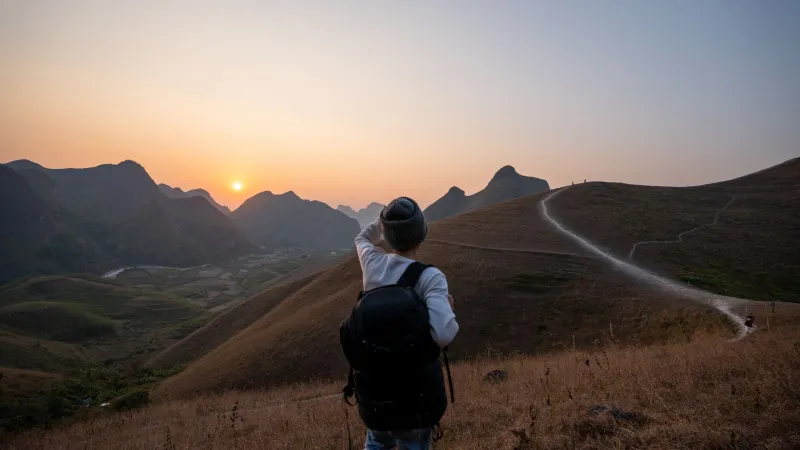
For years, your mom probably told you that video games were rotting your brain and keeping you indoors. Well, Mom, buckle up — because those same games are now sending an entire generation of players to Kyoto, Iceland, the Scottish Highlands, and beyond. Welcome to the era of game-inspired travel, where the map screen isn't just a menu option. It's a vacation itinerary.
Millennials and Gen Z travelers — long stereotyped as homebodies glued to screens — are increasingly using immersive gaming worlds as their primary source of wanderlust. And the travel industry, always ready to spot a wave worth riding, is paddling out hard to catch it.
From the Tavern to the Terminal
It didn't happen overnight. For years, gamers quietly noticed that the rolling hills in The Witcher 3 looked suspiciously like the Polish countryside, or that Assassin's Creed Origins made ancient Egypt feel achingly real. But somewhere between the pandemic's forced hibernation and the explosion of open-world games with jaw-dropping environmental design, something clicked.
People started Googling the real places.
"We had a customer book a two-week Japan itinerary almost entirely based on locations from Ghost of Tsushima," says one adventure travel consultant who works with a boutique agency that has quietly started marketing to gaming communities. "She'd spent 80 hours in that game. She knew the landscape, the aesthetic, the vibe she wanted. We basically just had to translate it into actual hotels and ferry schedules."
That translation business is booming. Travel companies are waking up to the fact that games like Ghost of Tsushima, Red Dead Redemption 2, Horizon Zero Dawn, and the Assassin's Creed franchise are essentially the most beautifully produced travel documentaries ever made — except interactive, and with more sword fights.
The Games That Launched a Thousand Trips
Certain titles keep coming up when gamers talk about travel inspiration, and it's not hard to see why.
Ghost of Tsushima is basically a love letter to feudal Japan rendered in breathtaking detail. Tsushima Island itself has reportedly seen a notable uptick in international tourism interest since the game's 2020 release, with the island's tourism board even acknowledging the game's cultural impact. Players who spent dozens of hours wandering through golden forests and soaking in hot springs didn't just want to visit Japan — they wanted that Japan.
The Legend of Zelda: Breath of the Wild sent players scrambling to find real-world locations that matched its sweeping vistas and dramatic cliffs. Spoiler: Iceland, Norway, and parts of the American Southwest scratch that itch pretty well. Several hiking and adventure travel companies have started quietly curating "Zelda-esque" outdoor itineraries without ever actually using Nintendo's IP.
Red Dead Redemption 2 is practically a love song to the American West. Rockstar's obsessive environmental detail — the way light hits the canyon walls, the way rivers cut through desert plains — has reportedly sent players on road trips through Utah, Montana, and New Mexico, chasing a landscape they already fell in love with from their couch.
And then there's the entire Assassin's Creed franchise, which at this point has served as a virtual tour guide for ancient Greece, Renaissance Italy, Viking-era England, and Revolutionary America. Ubisoft's research teams are so thorough that historians have praised the games' accuracy. Players aren't just inspired — they're educated before they even book the flight.
Travel Companies Are Finally Paying Attention
The smarter corner of the travel industry isn't just noticing this trend — it's actively recruiting. A handful of adventure travel operators in the US have started marketing directly to gaming communities, running ads on Twitch, partnering with gaming influencers, and building itineraries explicitly framed around game-world aesthetics.
One operator offering guided trips through Japan's more remote prefectures describes the gamer traveler as "a dream client." Why? Because they've already done the emotional homework. They're not arriving blank — they have context, curiosity, and often a specific list of experiences they want to replicate. They want to stand in a bamboo forest. They want to visit a Shinto shrine at dawn. They want the feeling the game gave them.
That emotional pre-loading, as one travel blogger calls it, dramatically changes how people plan and experience trips. Instead of flipping through generic travel magazines, gamers are drawing from 60-hour personal narratives where they were the hero of the story. That's a powerful motivator to actually get on a plane.
The Bucket List Gets a Software Update
What's particularly fascinating — and honestly kind of wonderful — is how this trend is reshaping the very concept of the bucket list for younger travelers.
Traditional bucket lists were built on cultural shorthand: see the Eiffel Tower, visit the Grand Canyon, do a safari. Game-inspired travel is more personal and more specific. It's "I want to see the Northern Lights because that sky in Skyrim made me feel something I've never felt before." It's "I want to hike through a redwood forest because The Last of Us made nature feel sacred again."
That specificity is actually great for travel. Vague aspirations rarely survive contact with a credit card statement. Specific, emotionally charged goals? Those get booked.
Travel forums and subreddits dedicated to game-inspired trips have exploded in recent years. Threads with titles like "Planning a Greece trip based on Odyssey — where do I actually start?" rack up hundreds of replies from people who've already made the pilgrimage and want to share every detail.
Captain OK's Hot Take: This Is the Best Plot Twist in Travel History
Look, we've always believed that the best adventures start with a great story. Whether that story comes from a dusty paperback, a campfire tale, or a hundred hours of open-world gameplay — the destination it points you toward is just as real and just as worth chasing.
Gaming didn't make this generation lazy and indoorsy. It gave them a richer, weirder, more emotionally specific map of the world than any travel brochure ever could. And now they're using it.
So the next time someone gives you grief about the hours you've logged in a virtual world, just nod, smile, and quietly start comparing flight prices to Japan. The game already showed you exactly where you want to go. The only thing left is to actually get there.
All aboard, Captain. The real-world adventure starts now.