One Screen, Two Controllers, Zero Mercy: The Rise, Fall, and Glorious Comeback of Split-Screen Gaming
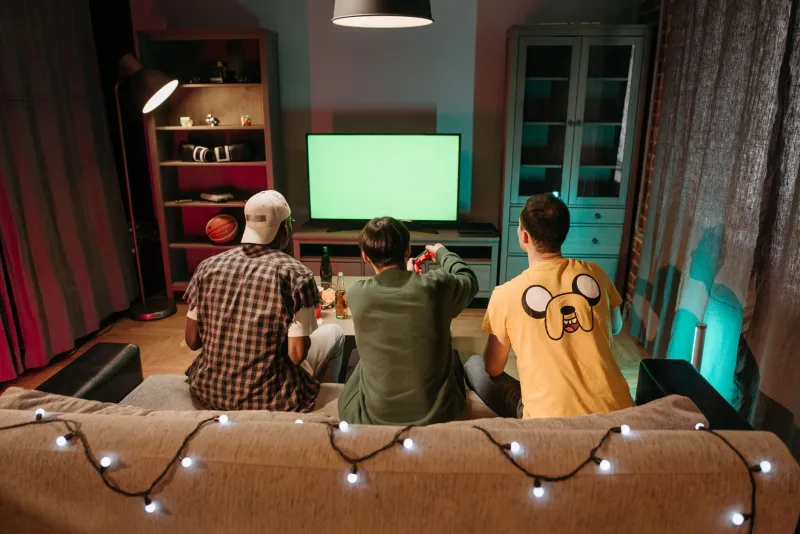
Let's set the scene. It's a Friday night somewhere in suburban America, circa 2003. There are two kids on a carpet that probably hasn't been vacuumed since the Clinton administration. One television. Two controllers. A bag of chips that's been treated like a communal shipwreck supply. And on that screen — GoldenEye 007, split cleanly down the middle like a treasure map torn in half.
This was the golden age. The era when gaming with your friends meant physically being there with your friends. No headsets, no lag, no matchmaking queues. Just pure, chaotic, elbow-in-the-ribs competition on a shared screen. And somehow, without anyone really asking for it, the industry quietly sailed away from all of that.
Now, after years of online multiplayer dominance, split-screen is making a comeback — and the gamers who grew up on it couldn't be more relieved.
The Couch Was the Game
Ask any millennial or elder Gen Z gamer about their favorite gaming memories and you'll hear the same theme over and over: it wasn't just the game that made it special. It was who was in the room.
"My brother and I used to play Halo 2 split-screen for literally six hours straight," says Marcus, a 34-year-old IT professional from Columbus, Ohio. "We'd pause it to get food, argue about who was playing dirty, and then go right back in. I don't think any online match I've played since has ever felt like that."
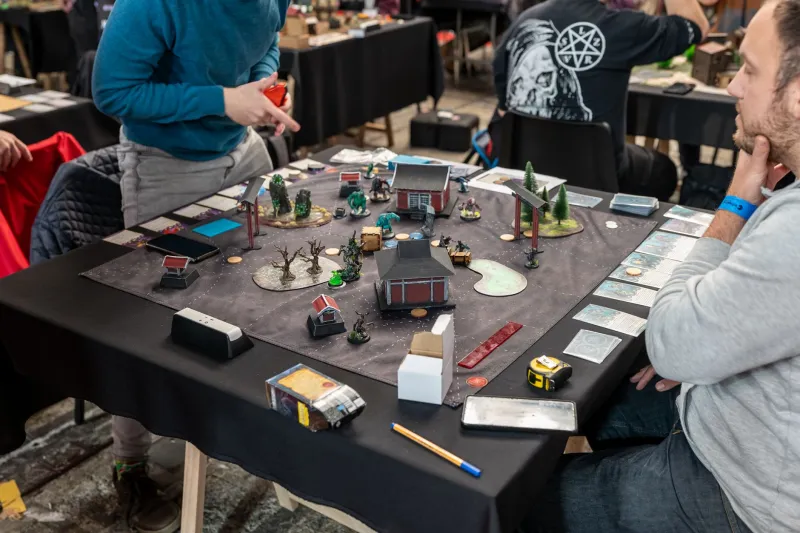
That feeling — of shared physical space, immediate reactions, real laughter at real moments — is something the online multiplayer revolution never quite managed to replicate. Sure, Discord voice chat is great. Sure, you can coordinate with a friend across three time zones. But you can't shove your buddy's controller out of his hands through a headset.
Split-screen gaming wasn't just a feature. It was a social architecture. The couch was the ship, and everyone on it was crew.
How Online Multiplayer Stole the Wheel
The pivot away from split-screen wasn't malicious — it was economic. As broadband internet became a household staple in the mid-2000s, publishers realized something powerful: online multiplayer didn't just expand the player base, it monetized it in entirely new ways. Separate accounts. Separate subscriptions. Separate downloadable content purchases.
When every player needs their own copy of the game, their own console, and their own online subscription, the math suddenly looks a lot different from a boardroom perspective than when four kids are crammed around one TV sharing one disc.
Developers began quietly dropping split-screen support from sequels to beloved franchises. Call of Duty scaled it back. Racing games that once supported four-player local chaos trimmed it to two, then none. Even cooperative games that practically begged for couch play started routing everything through online servers instead.
"It felt like the industry decided that convenience was the same thing as connection," says Priya, a game designer based in Austin, Texas, who has spent the last two years building a couch co-op indie title. "They weren't wrong that online is convenient. But they were very wrong that it's the same experience."
The Loneliness Nobody Talked About
Here's the thing about online multiplayer that nobody put on the box: it's kind of lonely.
You can play with a hundred people and still feel like you're gaming in a sealed cabin at the bottom of the ocean. Strangers don't celebrate with you. They don't groan audibly when you mess up the final boss. They don't steal your chips. The social texture of split-screen — the ambient chaos of shared physical space — simply doesn't translate through a fiber optic cable.
This isn't a niche complaint. Gaming forums, Reddit threads, and social media posts have been littered for years with players expressing genuine grief over the loss of local multiplayer culture. A 2022 survey by the Entertainment Software Association found that local multiplayer remained one of the most requested features in gaming, particularly among players aged 25 to 40. That's not nostalgia talking. That's a market signal flare.
The Indie Armada Riding to the Rescue
While the major publishers were busy building ever-more-elaborate online infrastructure, a scrappy fleet of indie developers noticed the gap in the water and steered straight toward it.
Games like It Takes Two, Overcooked, Lovers in a Dangerous Spacetime, and A Way Out didn't just include split-screen or local co-op as an afterthought — they built their entire design philosophy around it. It Takes Two, which swept The Game Awards in 2021, literally cannot be played alone. It requires two players, and its entire emotional arc is constructed around the act of cooperation. It won Game of the Year. The industry noticed.
"There's a real hunger for experiences that put people in the same room," says Priya. "We saw it explode during the pandemic when people were stuck at home with their families or roommates. Suddenly everyone wanted local co-op again."
The pandemic years, paradoxically, reminded a generation of gamers what they'd been missing. With nowhere to go and people to spend time with right there in the apartment, couch gaming stopped feeling retro and started feeling essential.
Big Studios Are Catching On (Finally)
Even the major publishers are beginning to read the tide. Halo Infinite brought back split-screen co-op after years of the series abandoning it — and the announcement was met with genuine celebration from the community. Nintendo, bless their stubbornly joyful hearts, never really abandoned local multiplayer in the first place, and their continued success with the Switch proves that putting people together in the same room is still a winning formula.
More studios are listing local co-op support as a selling point in their marketing. Gaming journalists are actively calling out when split-screen is absent from titles where it should logically exist. The culture is shifting.
Why This Matters Beyond Nostalgia
It would be easy to dismiss the split-screen revival as pure sentimentality — a bunch of grown adults who miss their childhoods. But there's something more meaningful happening here.
In an era where screens increasingly isolate us, where social media simulates connection without really providing it, and where the average American reports feeling lonelier than ever, the appeal of literally sharing a screen with someone you care about is about more than pixels. It's about proximity. It's about presence.
Captain OK has always believed that the best adventures happen with crew. And the crew that games together on a shared screen — arguing, laughing, occasionally throwing a controller — is crew that stays together.
So dust off the old couch cushions, find a friend who lives within driving distance, and fire up something with a split-screen mode. The golden age isn't dead. It just went below deck for a while.
And now it's back. With snacks.