Your Webcam, Your Ship: How Regular Gamers Are Sailing Twitch and YouTube All the Way to the Bank
Not so long ago, the idea of quitting your day job to play video games on the internet sounded about as sensible as navigating the Atlantic in a kiddie pool. And yet, here we are. Thousands of everyday Americans — people who started streaming from their spare bedrooms, basement couches, and college dorm rooms — are now pulling in real income doing exactly that. Some are paying rent. A few are paying off mortgages. And a handful are, frankly, doing better than their former bosses.
So what changed? And more importantly, how do you get in on it?
The Barrier to Entry Basically Fell Overboard
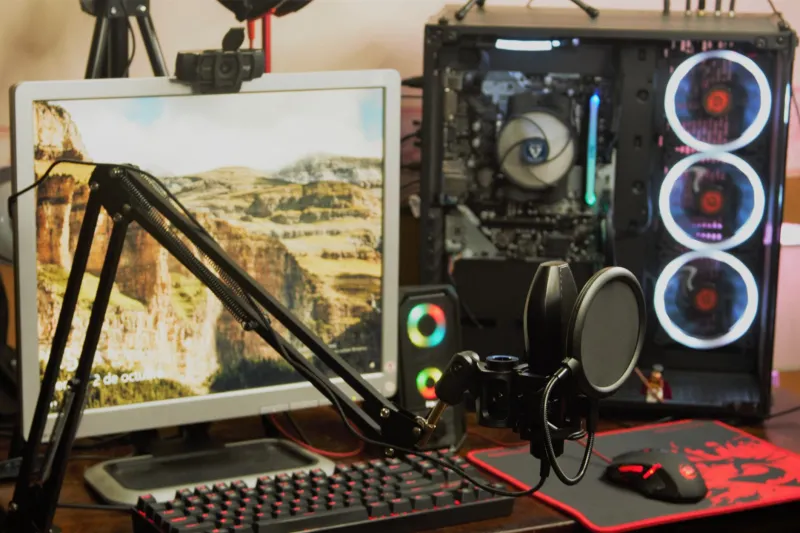
A decade ago, breaking into streaming required a near-professional setup: high-end PCs, capture cards, dedicated microphones, and enough technical know-how to make an IT department jealous. Today? A halfway decent laptop, a $50 USB mic, and a stable Wi-Fi connection can get you on the air in under an hour.
Platforms like Twitch and YouTube Gaming have spent years lowering the drawbridge. Twitch's Affiliate Program — the first monetization milestone for new streamers — now requires just 50 followers, three concurrent viewers on average, and 500 total minutes broadcast over 30 days. That's not a mountain. That's a speed bump.
YouTube, meanwhile, has leaned hard into its clip-friendly algorithm, where even a single viral gaming moment can funnel thousands of new subscribers to a channel overnight. The tools are out there. The audience is massive. The question is no longer can you do it — it's how do you do it without burning out after two weeks.
What the Money Actually Looks Like
Let's talk numbers, because the fantasy and the reality of streaming income are two very different ships.
According to data compiled by StreamerSquare and various creator economy reports, the average Twitch Affiliate earns somewhere between $50 and $1,500 per month — a range wide enough to drive a cargo freighter through. That spread reflects the enormous difference between someone streaming twice a week to 12 viewers and someone who has built a consistent audience of 200 to 500 concurrent watchers.
For Twitch Partners — the tier above Affiliate, requiring 75 average concurrent viewers — monthly earnings typically land between $2,000 and $5,000, though top earners with thousands of live viewers can clear six figures annually. On YouTube, the ad revenue model tends to reward creators with large back-catalogs of searchable content; a gaming channel with 100,000 subscribers posting regularly can realistically earn $3,000 to $10,000 per month through ads alone, before factoring in sponsorships or merchandise.
None of this is overnight treasure. But it's real money, and it compounds.
Real Crews, Real Stories
Take Marcus, a 28-year-old from Columbus, Ohio, who started streaming Minecraft and Stardew Valley in 2020 during the pandemic lockdowns. "I genuinely had nothing else to do," he says. "I figured if three people watched, great. If zero people watched, at least I had someone to talk to — even if it was just me."
By month four, he had 200 Twitch followers. By month eight, he hit Affiliate. Two years in, he had built a YouTube channel with 45,000 subscribers and a Patreon with 180 paying members. He hasn't left his streaming career since. "I'm not rich," he's quick to clarify. "But I made more last year than I did working retail management, and I work in sweatpants."
Then there's Dani, a 34-year-old mom from Austin, Texas, who started a cozy gaming channel focused on simulation and puzzle games. Her angle — calm, family-friendly content in a sea of high-energy reaction streamers — carved out a niche that sponsors actively sought out. "Brands want wholesome," she explains. "I didn't plan it that way, but apparently 'woman plays Animal Crossing and doesn't scream' is a marketable identity."
Her channel now earns a consistent side income that covers her family's vacation fund and then some.
The Strategy Behind the Stream
Here's the part the highlight reels don't show: successful streamers treat their channels like a business, even when — especially when — it doesn't feel like one yet.
Consistency beats quality, at first. Algorithms on both Twitch and YouTube reward regular activity. Streaming three times a week on a schedule your audience can count on does more for growth than one spectacular broadcast per month.
Niche down before you branch out. The streamers who grow fastest aren't trying to be everything to everyone. They pick a game, a genre, or a vibe — speedrunning, horror games, retro classics, cozy sims — and own it completely. Once you have a crew, you can expand.
Clips are your recruiting posters. Short, shareable moments clipped from streams and posted to TikTok, Instagram Reels, and YouTube Shorts are how most new viewers find their way to a channel. Think of every funny moment, clutch play, or genuine reaction as a little flare gun fired into the algorithmic ocean.
Community is the anchor. Discord servers, chat engagement, and even simple things like remembering regular viewers' names build the kind of loyalty that translates into subscriptions, tips, and Patreon support. People don't just watch streamers they like — they join them.
The Honest Part Nobody Likes to Hear
Streaming is not a get-rich-quick scheme, and anyone selling it as one is trying to sell you a course. The vast majority of people who start streaming will plateau, burn out, or both. Growth is slow, the competition is fierce, and there will be nights when you're broadcasting to an audience of four people — two of whom are bots — while questioning every decision you've ever made.
But here's the thing: the people who stick with it, who find genuine enjoyment in the process rather than just chasing the payout, tend to build something real. The barrier to entry has never been lower. The audience has never been bigger. And the tools have never been more accessible.
You don't need to be the next Ninja or Pokimane. You just need to find your crew, pick your course, and keep sailing — even when the waters get choppy.
Cast Off and Start Broadcasting
If you've been sitting on the idea of starting a stream, consider this your official permission slip. Set up a free Twitch or YouTube account. Download OBS (it's free). Buy a halfway decent mic. Pick a game you genuinely love. Hit go.
The worst-case scenario is that you have a great time talking about video games into the void for a few months. The best-case scenario? You build a career doing something you'd be doing anyway.
Captain OK's official advice: every legendary voyage started with someone deciding to leave the harbor. Your stream is the harbor. What are you waiting for?