Harvest Moon for the Soul: How Cozy Games Became America's Unlikely Mental Health Lifeline
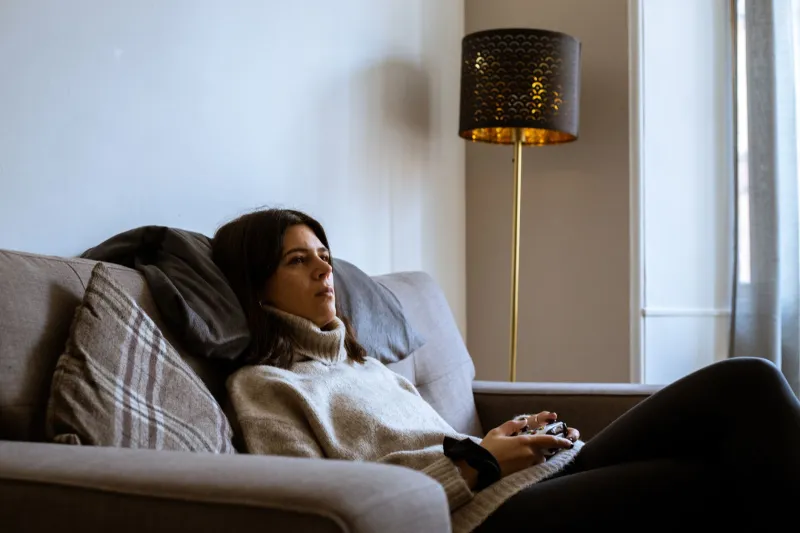
Picture this: It's 11 PM on a Tuesday. A 34-year-old accountant in Columbus, Ohio has just finished answering her forty-seventh work email of the day. She doesn't reach for Netflix. She doesn't scroll Instagram. She picks up her Nintendo Switch, opens Stardew Valley, and spends the next forty-five minutes quietly watering virtual crops while soft piano music plays in the background.
By midnight, she feels genuinely better.
This scenario, repeated in countless variations across the country every single night, has caught the attention of researchers, therapists, and wellness professionals who are asking a question that would have seemed absurd ten years ago: Can a video game about farming actually help with anxiety?
The answer, it turns out, is increasingly yes.
What Makes a Game "Cozy"?
The cozy game genre doesn't have a rigid definition, but you know one when you play one. Think Stardew Valley, Animal Crossing: New Horizons, Unpacking, A Short Hike, Spiritfarer, and Cozy Grove. These games share a deliberate design philosophy: no punishment for failure, no ticking countdown clocks, no opponents trying to destroy you. Progress is gentle. Aesthetics lean warm and soft. The emotional register hovers somewhere between a cup of chamomile tea and a weighted blanket.
They are, by design, the opposite of stress.
And in a country where the American Psychological Association's 2023 Stress in America report found that a majority of adults describe their stress levels as significant or extreme, the timing of cozy gaming's rise feels less like coincidence and more like cultural necessity.
Scientists Are Paying Attention
Dr. Rachel Kim, a licensed clinical psychologist in San Francisco who specializes in digital wellness, started incorporating cozy game discussions into her practice around 2020 — not coincidentally, the year Animal Crossing: New Horizons launched during the early months of the pandemic and sold over 13 million copies in its first six weeks.
"What I kept hearing from patients was that these games gave them a space where they felt competent and calm at the same time," she explains. "A lot of anxiety comes from a sense of uncontrollability. Cozy games offer the opposite — a world where your actions always lead to positive outcomes, where there's no losing state, and where the pace is entirely yours."
Formal research is catching up to what players have known anecdotally for years. A 2022 study published in the journal Cyberpsychology, Behavior, and Social Networking found that low-arousal games — those with calm pacing, non-competitive mechanics, and soothing aesthetics — produced measurable reductions in cortisol levels and self-reported anxiety in adult participants. A separate study out of the University of Oxford's Internet Institute suggested that the emotional benefits of gaming are most pronounced when players feel a sense of autonomy and immersion, both hallmarks of cozy game design.
The Pandemic Accelerant
It's impossible to talk about the cozy game explosion without acknowledging what 2020 did to America's collective nervous system. When the world locked down, millions of people suddenly needed somewhere to go that felt safe. Animal Crossing delivered a sun-drenched island. Stardew Valley offered a farm with endlessly forgiving seasons. These weren't just games — they were destinations.
"I had patients who had never played a video game in their lives start playing Animal Crossing," recalls Dr. Kim. "Middle-aged adults, elderly patients, people who would have laughed at the idea of gaming as therapy. The pandemic stripped away so many of our normal coping mechanisms — travel, socializing, routine — and these games quietly filled the gap."
Nintendo reported that over 40 million copies of Animal Crossing: New Horizons have been sold worldwide. Stardew Valley, an indie game made largely by a single developer, has sold over 20 million copies. These are not niche numbers. These are cultural phenomenon numbers.
Not Just Escapism — Something More Specific
Critics of gaming as therapy often reach for the escapism argument: aren't people just running away from their problems? Proponents of cozy gaming research push back hard on that framing.
"Escapism implies avoidance," says Marcus Webb, a game designer and mental health advocate based in Chicago who consults with developers on therapeutic game design. "But what we see with cozy games is something closer to restoration. Players aren't avoiding their problems — they're rebuilding the emotional resources they need to face them."
The distinction matters clinically. Restorative experiences — a walk in nature, meditation, creative hobbies — are well-documented tools for emotional regulation. Researchers argue that cozy games trigger similar neurological responses: reduced sympathetic nervous system activation, increased sense of mastery, and the quiet satisfaction of completing small, achievable tasks.
Unpacking, a 2021 game in which players simply unpack boxes and arrange a home across different life stages, became an unlikely tearjerker for thousands of players who found themselves processing grief, life transitions, and identity through the act of placing a childhood stuffed animal on a virtual shelf. No dialogue. No combat. Just objects and feeling.
The Wellness Industry Takes Notice
Beyond clinical research, the broader wellness industry is waking up to cozy gaming's potential. Several therapy apps now recommend specific cozy titles as supplemental tools between sessions. A handful of progressive corporate wellness programs in tech companies have begun including gaming breaks — specifically low-stress, cozy-style games — alongside meditation apps and yoga subscriptions.
Game developers are responding to the demand with unmistakable enthusiasm. The cozy game genre has seen its release volume roughly triple since 2019, with dozens of new titles launching annually on Steam, Nintendo Switch, and mobile platforms. Publishers who once chased the battle royale dollar are quietly greenlighting farming simulators and life management games at an unprecedented rate.
A Few Important Caveats
It would be a disservice to suggest that Stardew Valley is a substitute for professional mental health care. Researchers are careful to frame cozy gaming as a complementary tool, not a treatment. Severe depression, trauma, and anxiety disorders require clinical support that no game — however charming — can replace.
There's also a legitimate conversation to be had about avoidance patterns. For some individuals, the low-stakes comfort of cozy games can become a way of postponing difficult emotional work rather than preparing for it. Balance, as with most good things in life, is the operative word.
What America Is Really Asking For
The rise of cozy gaming says something profound about the current American moment. In a culture that relentlessly celebrates productivity, competition, and optimization, millions of people are choosing — in their precious free time — to do absolutely nothing high-stakes. They're choosing to fish in a pixelated river. To befriend a talking raccoon. To arrange furniture in a digital apartment.
They're choosing, in other words, to be gentle with themselves.
Maybe that's the most adventurous thing any of us can do right now. Captain OK salutes every single one of you tending your virtual farms at 11 PM. The seas can be rough out there. Sometimes the bravest move is dropping anchor, putting on some soft music, and just watering your crops.
You've earned the rest.