Scoundrels, Rogues, and Save Files: Why Playing the Villain Feels So Good
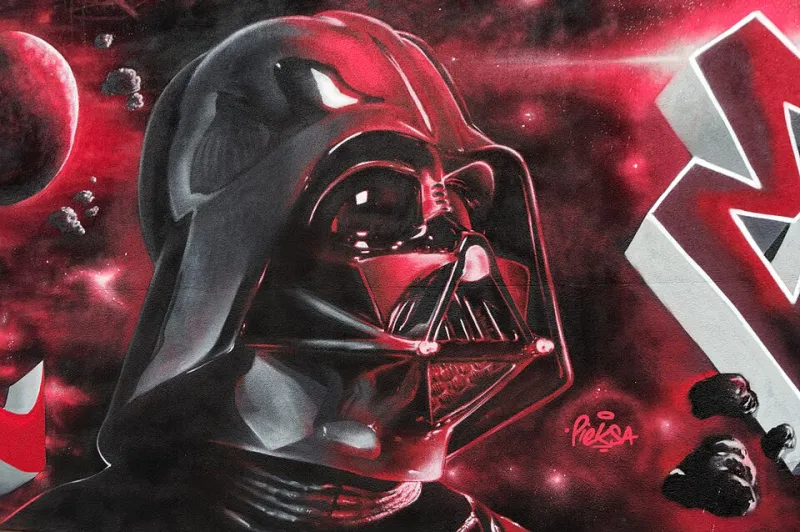
Photo: Photo: Jakub Hałun; Graffiti: Pieksa, CC BY-SA 4.0, via Wikimedia Commons
In real life, most of us return the shopping cart. We hold doors. We say sorry when we bump into someone. Then we sit down with a controller and consider whether it is worth burning down a village for a slightly better sword. This is the strange bargain of video games: they let us be terrible people in a place where terrible behavior costs nothing but a save file.
Playing the villain is not a new idea. It is older than morality meters and dialogue wheels. But modern games have made it more tempting than ever, with choice systems that reward cruelty, antiheroes who make ruthlessness look cool, and open worlds that practically dare you to cause a little chaos. The question is why we keep pressing the bad-guy button, and whether it means anything about who we are when the console is off.
The Safe Harbor of Bad Behavior
A game is a magic circle. Inside it, actions have consequences that are real enough to feel meaningful but fake enough to be reversible. That is the whole trick. You can be a scoundrel without ruining a life. You can test the edges of your own morality without actually hurting anyone. It is closer to a roller coaster than a crime spree.
This is why the petty villainy of games is often so gleeful. In Fable, you can kick chickens and become a legendary jerk. In Grand Theft Auto, you can cause mayhem and then reload when the police get annoying. In Overlord, you are literally a dark lord with minions and a tower, and the game invites you to enjoy it. The stakes are fictional. The freedom is real.
There is also a simple pleasure in doing the thing you are not supposed to do. Games are built on rules, and rules create temptation. The moment a game says you can be good or evil, a small part of your brain starts wondering what the evil option looks like. Not because you want to be evil, but because the game has turned curiosity into a mechanic.
Moral Choice Systems: A License to Be Awful
Choice systems are where villainy gets complicated. Knights of the Old Republic let players fall to the dark side and feel like a proper Sith. Mass Effect gave us renegade options that were less evil than aggressively impatient. Fable tracked your reputation and made the world react to your horns. Dishonored offered a high-chaos path that made the world darker and the ending worse. Baldur’s Gate 3 let players indulge some genuinely disturbing impulses, then asked them to live with the party’s reactions.
The best systems make villainy feel like a real choice, not a menu item. They give you power, but they also give you cost. Maybe your allies leave. Maybe a town suffers. Maybe the ending is not the triumphant one you wanted. That cost is what makes the choice interesting. If being bad were purely a power fantasy with no downside, it would be boring. It would just be a cheat code with extra dialogue.
This is also why so many players save-scum their way through evil runs. They want to see what happens. They want to test the boundary. Then they reload and go back to being a decent person, because the point was never to live in that world. The point was to visit.
The Antihero Is Not a Hero (That’s the Point)
Some of gaming’s most beloved characters are not villains exactly. They are scoundrels, mercenaries, and reformed monsters. They kill when they have to. They crack jokes at bad moments. They have a code, even if it is a little crooked. We like them because they are competent and free, and because their flaws make them more interesting than a saint with a sword.
But there is a difference between an antihero and a true villain protagonist. Games like Tyranny, Dungeon Keeper, and Overlord put you on the wrong side of the moral ledger and ask you to enjoy it. That can be fun because it is a costume. You are not actually a dark lord. You are a person in a chair, probably wearing sweatpants, deciding whether to tax a goblin village. The Jolly Roger is a costume, not a conversion.
The danger is when a game confuses cruelty with depth. A villain who is simply rude to everyone is not interesting. A villain with a reason, a style, and a consequence is. The best bad-guy runs are the ones where you understand why you are doing it, even if you would never do it yourself.
Why We Do Not Become Monsters IRL
Here is the reassuring part: most research on video games and aggression does not suggest that playing a villain turns people into villains. The evidence is messy, and context matters, but fantasy violence is not a one-way ticket to real-world cruelty. Humans are pretty good at separating play from life. We know the difference between a controller and a crowbar.
That does not mean games are consequence-free. Being a jerk in online voice chat is not role-playing; it is just being a jerk. There is a difference between playing a scoundrel in a single-player story and making a real person’s evening worse. The magic circle only works when everyone inside it agrees to play.
If anything, playing the villain can be a way to practice moral imagination. You see the cost of a bad choice. You feel the weight of a betrayed ally. You learn what power looks like when it is not restrained. Then you turn off the console and go back to returning shopping carts, which is probably the healthiest ending available.
The Jolly Roger Is Not a Life Plan
The appeal of villainy in games is not that we secretly want to be awful. It is that games give us a safe place to ask what if. What if I took the shortcut? What if I betrayed the quest giver? What if I ruled the dungeon instead of escaping it? The answer is usually: interesting, occasionally fun, and not something I need to do again tomorrow.
So go ahead and sail under the black flag for an evening. Rob the caravan. Betray the wizard. Kick the chicken. Just remember that the best villain runs are the ones you can walk away from, and the best players know the difference between a save file and a life. The Jolly Roger looks great on a ship. It makes a terrible life plan.