Gather 'Round the Screen: How Single-Player Games Became the New Party Experience
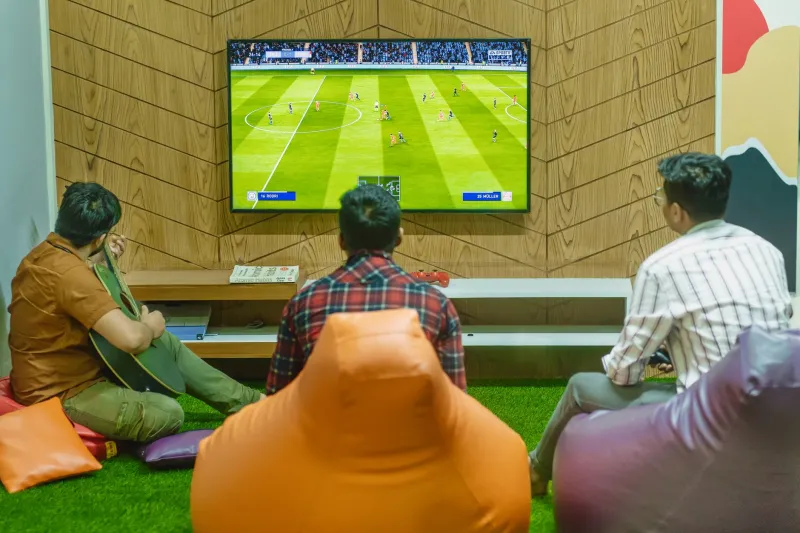
There's a scene that's playing out in living rooms, Discord servers, and group chats all across America right now. One person has the controller. Five others are leaning forward like they personally have something at stake. Someone just yelled, "DON'T GO IN THERE." Nobody listened. The boss wipes the floor with the player, and the entire room erupts.
This is single-player gaming in 2024 — and it looks a whole lot like a party.
Once considered the loneliest corner of the gaming world, solo story campaigns have quietly, almost sneakily, transformed into some of the most communal experiences in entertainment. No lobby required. No team matchmaking. Just one person at the helm and a whole crew along for the ride.
The Ship Sailed Without Warning
Nobody really planned this. There wasn't a press release announcing that Elden Ring would become a group activity. It just... happened. Fromsoft's brutally gorgeous open world dropped in 2022, and instead of people suffering alone in silence (as the developers probably intended), entire friend groups started gathering to watch someone else get repeatedly destroyed by a horse with a flail.
The pattern held. Baldur's Gate 3 launched in 2023 and became one of the most debated games in recent memory — not just on Reddit, but in real-time group watch sessions where friends screamed at each other over which companion to romance or whether to let the paladin fall from grace. These weren't passive spectators. They were co-pilots arguing over the wheel.
By 2024, the trend had fully crystallized. Single-player games with rich narratives, brutal challenge, or meaningful choices had become communal currency. Something to experience together, even when only one person holds the controller.
Why Watching Is Half the Fun
Here's the thing about a great single-player game: it generates reactions. Shock. Grief. Triumph. Confusion. Rage. And humans, being the chaotic social creatures we are, would rather experience those reactions in a crowd.
Think about it like going to see a horror movie. Sure, you could watch it alone on your laptop at 2 a.m. But it hits different in a theater full of people who all flinch at the same jump scare. Single-player gaming has tapped into that same electricity.
Story-rich indie games have been especially good at this. Titles like Hades, Disco Elysium, and Celeste carry emotional weight that makes spectators genuinely invested. When your friend finally beats a boss they've attempted forty-seven times, the room celebrates like a Super Bowl touchdown. When a plot twist lands, the group theorizing kicks into overdrive.
That collective energy? It's not a bug in the solo experience. It's become the feature.
Discord: The New Watch Party Deck
If living rooms are the ships, Discord is the ocean these new social gaming rituals sail on. Screen-share features have turned what used to be a passive Twitch-watching experience into something far more intimate and interactive. Your actual friends, in your actual server, watching you make choices they definitely disagree with.
The Discord single-player watch party has its own unwritten etiquette by now. Backseat gaming is technically allowed but must be earned. Spoilers from people who've already played are punishable by immediate muting. And everyone gets a vote on major story decisions, even though the person holding the controller will absolutely do whatever they want anyway.
It's chaotic. It's loud. It's exactly the kind of good-time energy that Captain OK was built to celebrate.
The Debate Club Nobody Asked For
One of the most underrated side effects of communal single-player gaming is the absolutely unhinged debates it spawns. Baldur's Gate 3 alone has generated more interpersonal conflict than most Thanksgiving dinners. Should you side with the Tieflings or the Druids? Is Gale actually trustworthy or is he playing you? Did your friend make the morally correct choice or did they just blow up the entire campaign because they thought it would be funny?
These aren't small conversations. They stretch across days. They invade group chats. They get revisited weeks later when someone starts a new playthrough and makes a completely different call.
The same thing happens with games like The Last of Us Part II, Cyberpunk 2077, and narrative-heavy indie darlings. The story becomes a shared text that a whole group can pull apart, argue over, and build inside jokes around. That's the kind of cultural glue that used to be reserved for TV shows and movies. Games are doing it now, and doing it better in a lot of ways, because the choices feel personal.
Group Hype Is a Different Beast
There's also the pure adrenaline factor. Watching someone attempt a high-stakes boss fight with a crowd behind them creates pressure and excitement that multiplayer gaming rarely matches in the same way. The tension is singular. There's no blaming a teammate. It's one person, one shot, and everyone watching knows it.
When that person finally lands the killing blow on a boss that's been wrecking them for two hours, the room goes absolutely unhinged. It's the gaming equivalent of a walk-off home run. The crowd didn't do anything — but they were there, and that makes all the difference.
Streaming culture taught us this years ago. The reason people watch others play games isn't just to learn strategies. It's to feel something alongside someone else. Living-room watch parties and Discord sessions are just the local, more personal version of the same impulse.
Single-Player, Multiplayer Hearts
Game developers are starting to take notice. Features that support the communal single-player experience are quietly becoming more common — from Baldur's Gate 3's actual multiplayer campaign mode that lets friends share the story, to games designed with "couch co-pilot" modes that let a second player assist without fully taking over.
But honestly, the community didn't wait for developers to catch up. They built the culture themselves, one watch party at a time.
The solo quest isn't dead. It's just got a crew now. And if the last few years are any indication, that crew is showing up with snacks, strong opinions, and absolutely zero chill when the final boss appears on screen.
All hands on deck. Someone just hit the title screen.