Unlock Your Brain: How Puzzle Games Became the Wellness Hack America Didn't See Coming
Unlock Your Brain: How Puzzle Games Became the Wellness Trend America Didn't See Coming
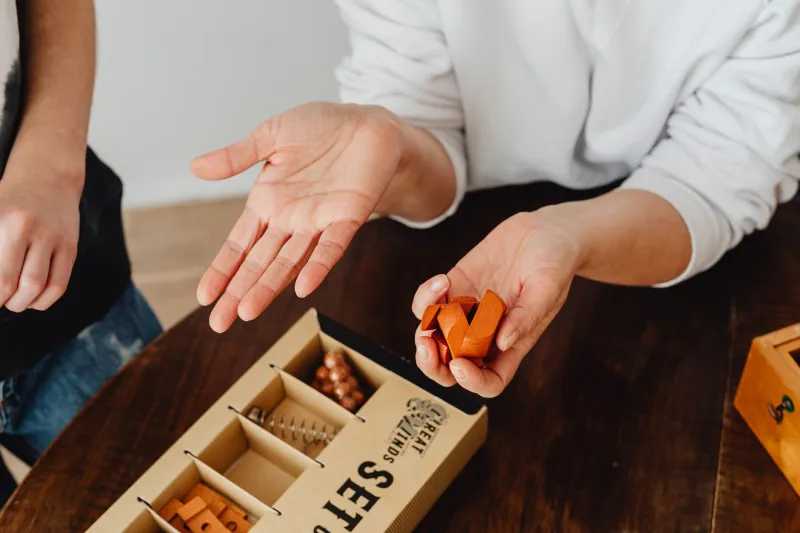
Somewhere between your third Zoom call of the day and your fourteenth scroll through a social media feed that seems specifically engineered to make you feel bad, a quiet revolution started happening at kitchen tables across America. People started putting down their phones. They picked up a wooden box with a hidden latch, a set of interlocking metal rings, or a thousand-piece puzzle featuring a very complicated painting of a lighthouse.
And they felt better.
It sounds almost too simple to be true, but the explosive growth of physical puzzle games and logic-based entertainment over the past several years tells a story that cognitive scientists, wellness experts, and gift-shop owners all agree on: the human brain, when given a genuinely interesting problem to solve with its hands, is a pretty happy brain.
How We Got Here: From Party Favor to Cultural Phenomenon
Puzzles have always existed, obviously. Your grandmother had a jigsaw puzzle going on a card table in the corner. Your uncle had a Rubik's Cube he could never quite solve. But the category has undergone a transformation so dramatic that calling today's puzzle market a descendant of those old standbys is like calling a tall ship a distant cousin of a rubber duck.
The pandemic was a significant accelerant. With nowhere to go and screens becoming genuinely oppressive, millions of Americans rediscovered the meditative satisfaction of physical problem-solving. Jigsaw puzzle sales spiked to extraordinary levels in 2020. But unlike a lot of pandemic-era hobby surges that faded when the world reopened, this one stuck. People didn't put down the puzzles when they could finally go outside again. They just found harder ones.
Today, the puzzle and brain teaser market in the US is robust enough to support specialty retailers, dedicated subscription boxes, artisan puzzle designers charging premium prices for handcrafted wooden mechanisms, and an entire ecosystem of puzzle cafés sprouting up in cities from Portland to Nashville.
What's Actually Flying Off the Shelves
The range of what counts as a "puzzle game" in 2024 is genuinely staggering. Here's a quick navigation chart through the most popular categories:
Mechanical Puzzle Boxes — These are the rock stars of the current puzzle boom. Beautifully crafted wooden or metal boxes with hidden compartments, secret latches, and multi-step opening sequences. Japanese craftsmen have been making these for centuries, but American audiences have discovered them with genuine enthusiasm. They're the kind of gift that makes someone stare at a box for forty-five minutes with complete, blissful focus.
Jigsaw Puzzles (But Weirder) — The classic format has been radically reinvented. Double-sided puzzles. Gradient puzzles with no distinct image. Puzzle sets where the pieces are themselves puzzle-shaped in unusual ways. Brands like Cloudberries and Nervous System have turned the humble jigsaw into something that belongs in a design magazine.
Disentanglement Puzzles — Those interlocking metal ring and wire puzzles that look simple and then absolutely are not. They've graduated from novelty shop trinkets to serious collector items and competitive puzzle-solving props.
Logic Grid Puzzles and Deduction Games — Think Clue meets Sudoku, with more narrative. Games like Sagrada, Azul, and Pandemic (the cooperative version) have found enormous audiences among adults who want mental engagement without the aggression of competitive gaming.
Escape-Room-in-a-Box — Companies like Unlock!, Exit: The Game, and Escape Tales have packaged the escape room experience into a format you can play on your dining room table. These have become wildly popular date-night and family-activity options.
What's Actually Happening in Your Brain
The wellness angle here isn't marketing fluff — there's legitimate cognitive science backing it up. When you engage with a physical puzzle, you're activating spatial reasoning, working memory, and pattern recognition simultaneously. More importantly, you're entering what psychologists call a "flow state" — that deeply focused mental zone where time seems to slow down and external stressors temporarily cease to exist.
Cognitive researchers have noted that the tactile element of physical puzzles — actually touching, turning, and manipulating objects — engages parts of the brain that purely digital activities don't reach the same way. There's something about the physical feedback of a mechanism clicking or a piece sliding into place that registers as genuinely rewarding in a way a touchscreen tap rarely does.
For adults managing anxiety, burnout, or the low-grade mental static that comes from living in an attention-economy world, that focused, tactile engagement can function as a genuine reset. It's mindfulness with a goal attached — which, for people who find traditional meditation frustratingly formless, turns out to be exactly the right combination.
The Gift That Actually Gets Used
Puzzle designers and specialty retailers have noticed something interesting: puzzle games have become one of the most reliably successful gift categories across virtually every demographic. They work for teenagers and retirees. They work for the person who has everything. They work as solo experiences and group activities.
Part of the appeal is the low barrier to entry. You don't need to learn complicated rules, download an app, or buy additional equipment. You open the box and you start figuring it out. That accessibility, combined with the genuine satisfaction of completion, has made puzzle games a staple of holiday gift guides, wedding registries, and "I have no idea what to get this person" emergency shopping situations across the country.
What's Here to Stay (And What's Just Hype)
Not every trend in the puzzle world deserves a permanent berth on your shelf. Here's Captain OK's honest assessment:
Sailing strong: Artisan wooden puzzle boxes, cooperative logic games, and premium jigsaw puzzles with distinctive artwork. These have built genuine communities and repeat buyers.
Worth trying: Escape-room-in-a-box formats. Quality varies wildly by brand, but the best ones are genuinely excellent experiences.
Proceed with caution: Overly gimmicky puzzle apps trying to ride the physical puzzle wave by adding minimal tactile elements. If it's mostly on a screen, it's not really the same thing.
Underrated gem: Competitive puzzle-solving events and puzzle cafés. If there's one near you, it's worth the trip. The community around serious puzzle enthusiasts is surprisingly warm and completely unpretentious.
Drop Anchor and Pick Up a Puzzle
Here at Captain OK, we spend a lot of time thinking about what makes leisure time genuinely restorative versus just time-filling. Puzzle games, in their best forms, land firmly in the restorative column. They ask something real of you — focus, patience, creative thinking — and they pay you back with the specific satisfaction of having figured something out.
In a world that often feels like it's designed to keep you slightly confused and perpetually scrolling, there's something almost rebellious about sitting down with a complicated wooden box and refusing to move until you've cracked it open.
Consider it a voyage worth taking. The treasure at the end is a brain that feels like it actually did something worthwhile today.
And honestly? That clicks.